
We build bakeries and women's work centers in rural sub-Saharan Africa. We do not partner with aid organizations, nor do we entangle ourselves with complex networks over which we have no knowledge or control of expenses or output.
We do it differently: we build things.
Specifically, we build village bakeries that feed and employ people. They serve as nutritional lifelines for communities facing food insecurity.
We build work centers that teach valuable, marketable skills. We believe that by giving a hand up, rather than a hand-out, we instill hope and provide opportunity for people to live well-crafted lives.
We do not believe in complicated giving formulas or non-transparent disclosures. Our model is simple and straight-forward: after a bakery is up and running, and workers – whether in the bakeries or the work centers – are trained and self-reliant, we move on to the next geographic area of need.
Build. Feed. Train. Repeat. It's what we do.
Pieces of bread produced per bakery annually
People fed weekly per bakery
People fed per flour bag sold
Bakeries built since 2014
Constructing bakeries in Rwanda that serve as hubs for food production and employment. Each facility becomes a cornerstone for community transformation.
Producing over one million servings of bread per year per bakery, nourishing approximately 39,000 people every week including 5,000 children.
Teaching food handling, baking, packaging, and delivery skills. Workers also learn to create artisanal products, including: hand-sculpted clay beads, African fabric bags, and recycled flour tote bags.
Once a bakery is operational and workers are self-reliant, the focus shifts to the next community in need. A sustainable model for lasting change.
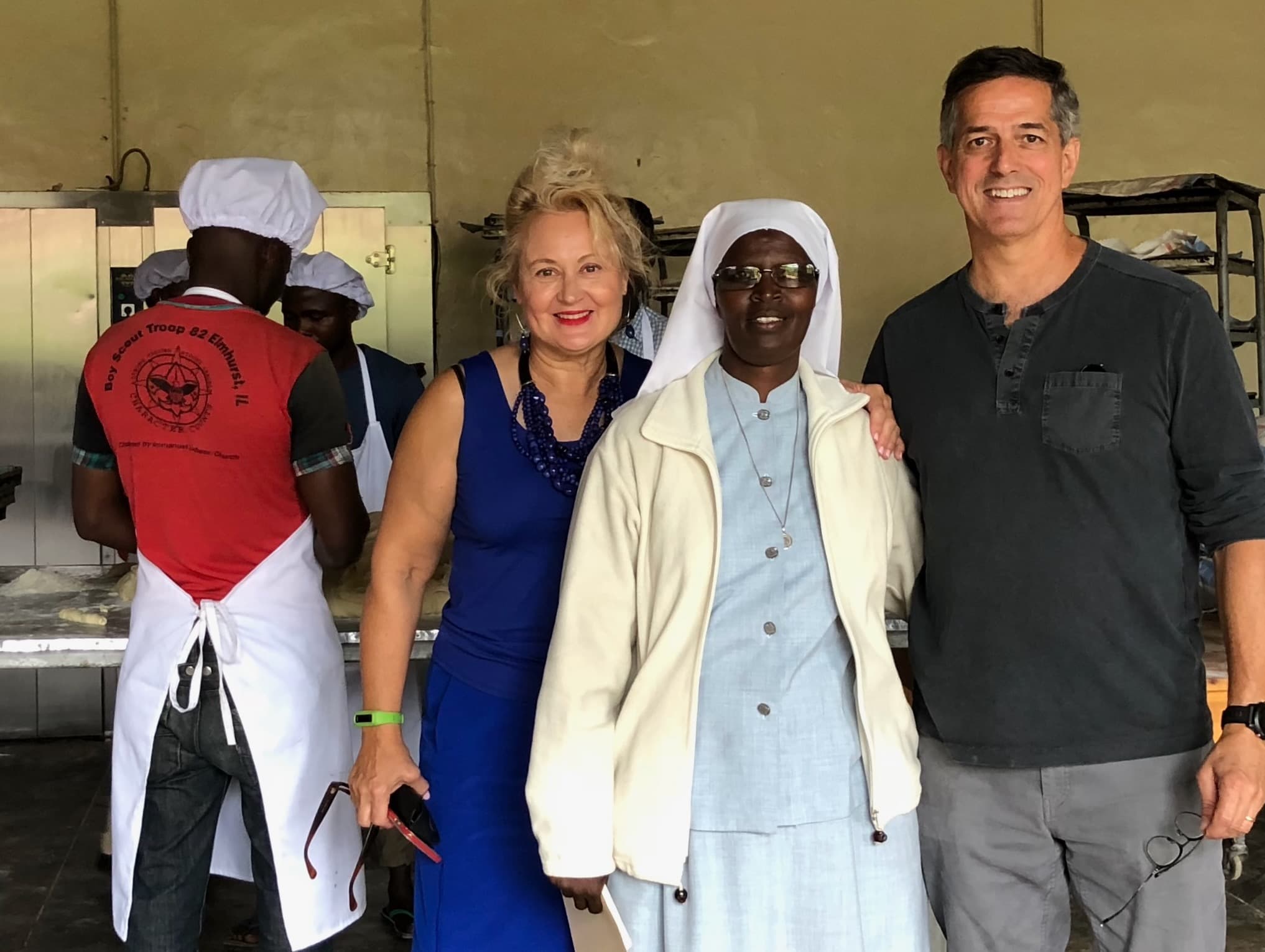
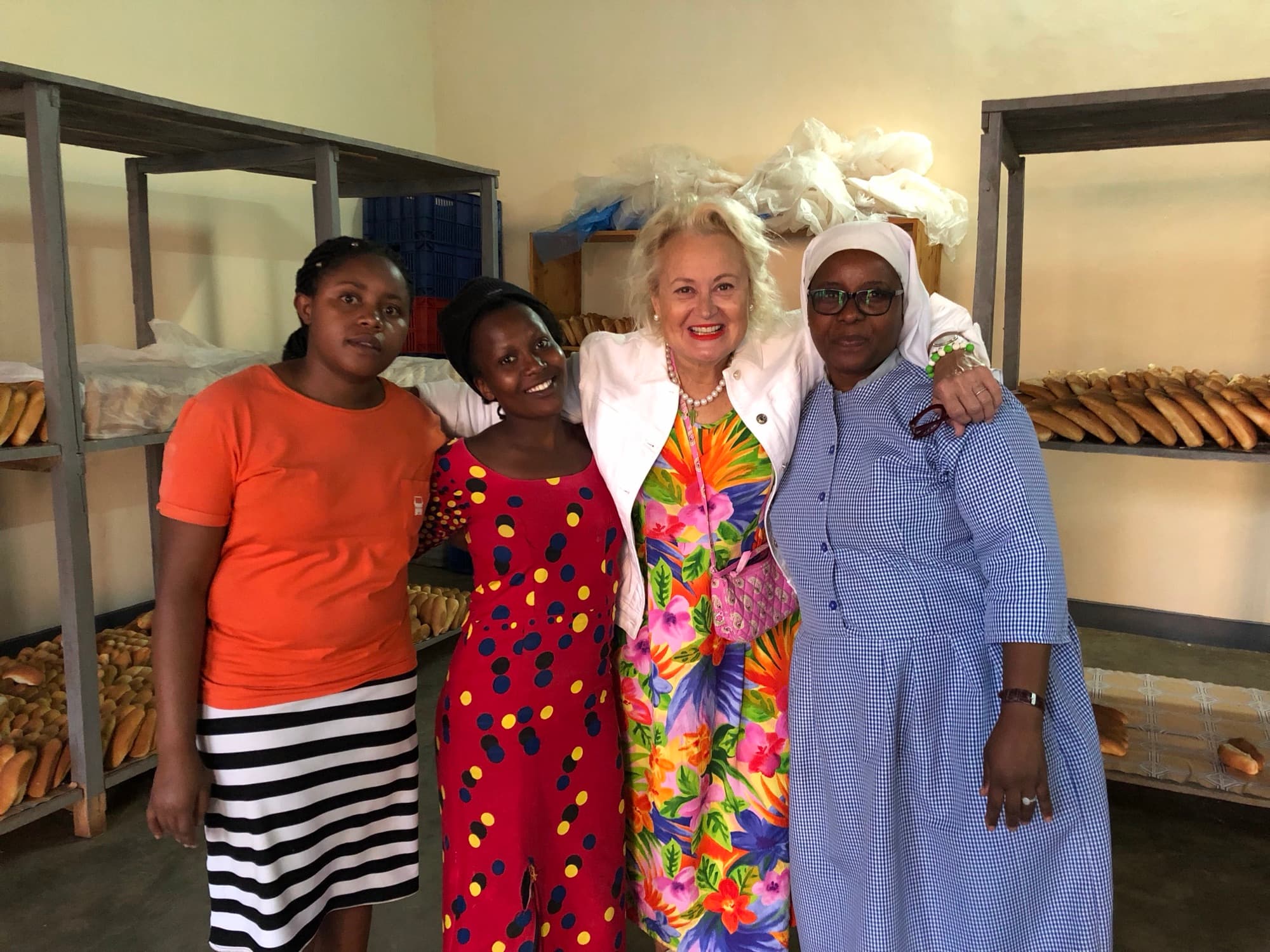
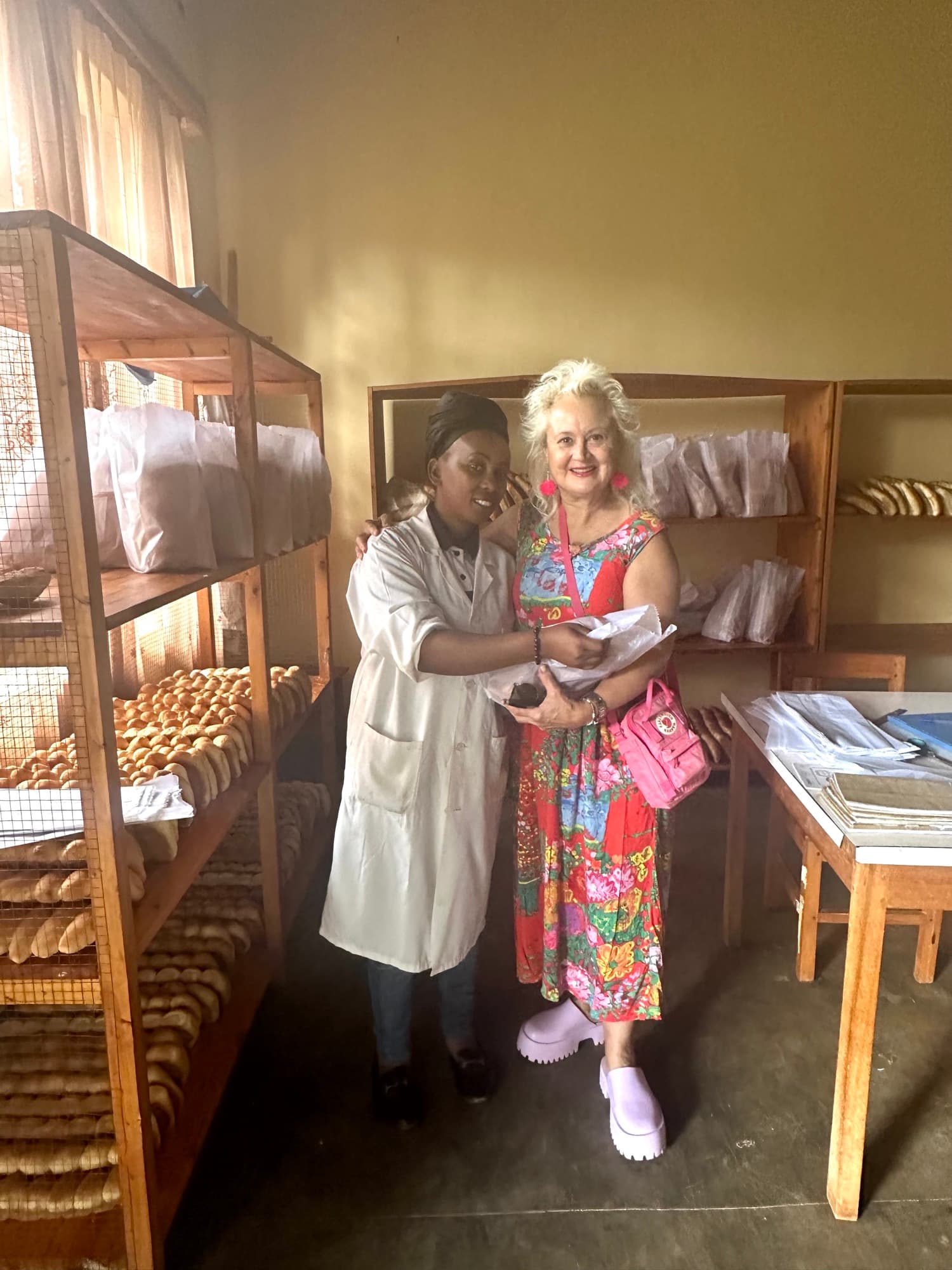
After personal visits to Rwanda exposed food inequities, Carolina and her husband Ernie responded to an invitation in 2012 to build a bakery for those lacking stable food access. By 2014, that first bakery was operational. Today, the organization has grown to four bakeries.
She teaches people how to create more beautiful, meaningful lives through making things with their hands—from baked goods to hand-sculpted clay beads to artisan bags made from recycled flour sacks.
“What if we used the emptied plasticized canvas flour sacks from the bakery and retrofitted them into tote bags?” With gorgeous leather straps, African fabric lining and a tag that simply said “700,” we could sell them with the simple yet profound message: you just fed 700 people. Many friends wanted to support the mission but didn't have the funds to commit to a bakery build-out; buying a tote could have real impact. Profits would go directly back to the bakery to buy more flour to feed more people and keep the cycle going.
An immediate second trip back to Rwanda was needed after we returned home with the thought: “we have no idea how to do this!” We needed to prototype the tote, build out a work room, hire seamstresses, find a leather factory and, to our surprise, buy expensive industrial sewing machines which could sew through the thick plasticized canvas. It took three more trips in 2019 to locate vendors and nail down a plan to get this done.
The leather factory went through a series of buyouts and re-structuring; they ultimately canceled our relationship due to management changes. We used this time to find a new, stable leather factory, build relationships with sole fabric entrepreneurs, and design other products that would utilize the teams and equipment we had already invested in.
This time and the development of additional products helped us define our customer base; older, affluent and philanthropically minded, they wanted our work to continue and became enthusiastic cheerleaders. Many had been to Africa, almost all wanted a bespoke or “limited edition” product, and they wanted to feel connected to our mission. Product development wound up falling into one of two core categories: bags or jewelry.
We became convinced that every core product must be labor intensive. Our mission is to give steady work to the rural poor. This can only be done by designing items that take a very long time to make. We incorporated previously unthought of materials and expanded our product line even further.
In late 2022, the idea was put to us to open a retail shop in country. Why were we not in the tourist area, showing our line and spreading our message? It also was becoming increasingly clear that we needed a distribution system beyond our current model. So in 2023, we began scouting the Musanze volcano region – home of the endangered silverback gorillas - for land. After a couple trips to the area and two failed attempts at securing acreage, in 2025 we finally found a spot in Musanze. We expect completion of our fourth major project in the fall of 2026.
flourFLOWER is a social enterprise dedicated to building bakeries and women's work centers in Rwanda. Through the sale of handmade jewelry, soaps, and bags, we create sustainable employment and provide food security for communities in need.